What’s

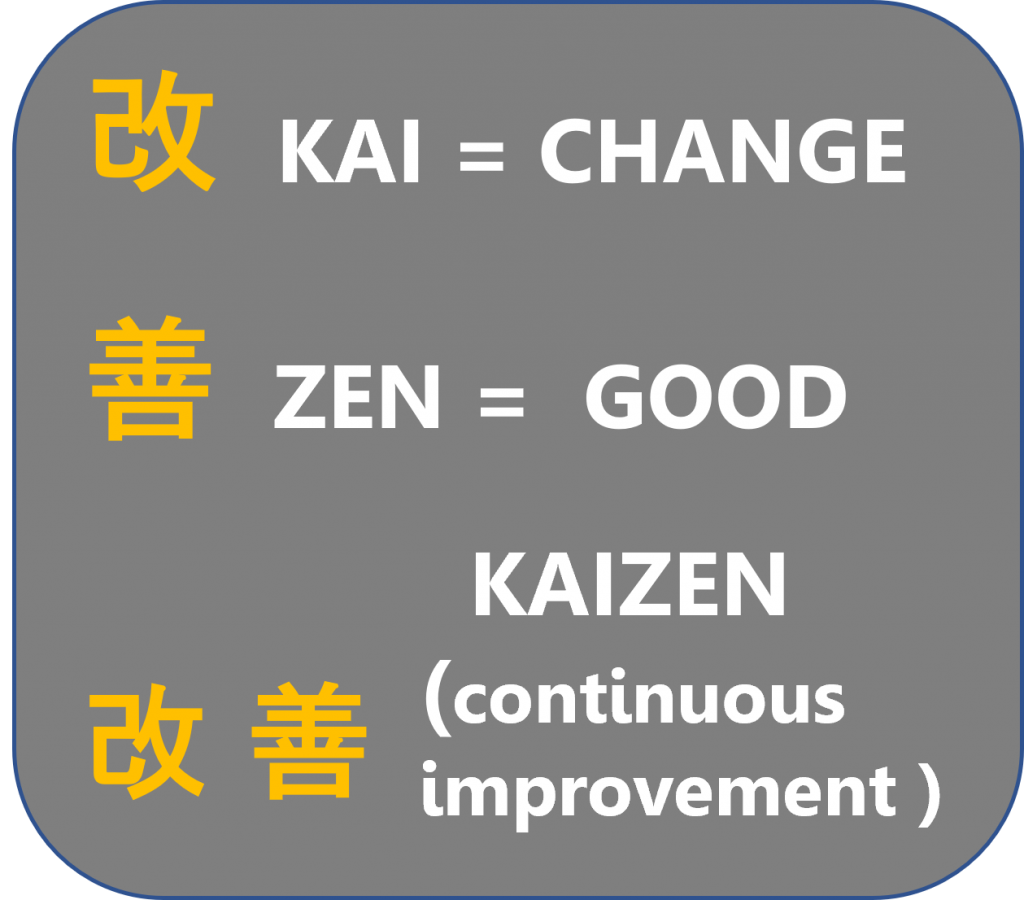
KAI ZEN

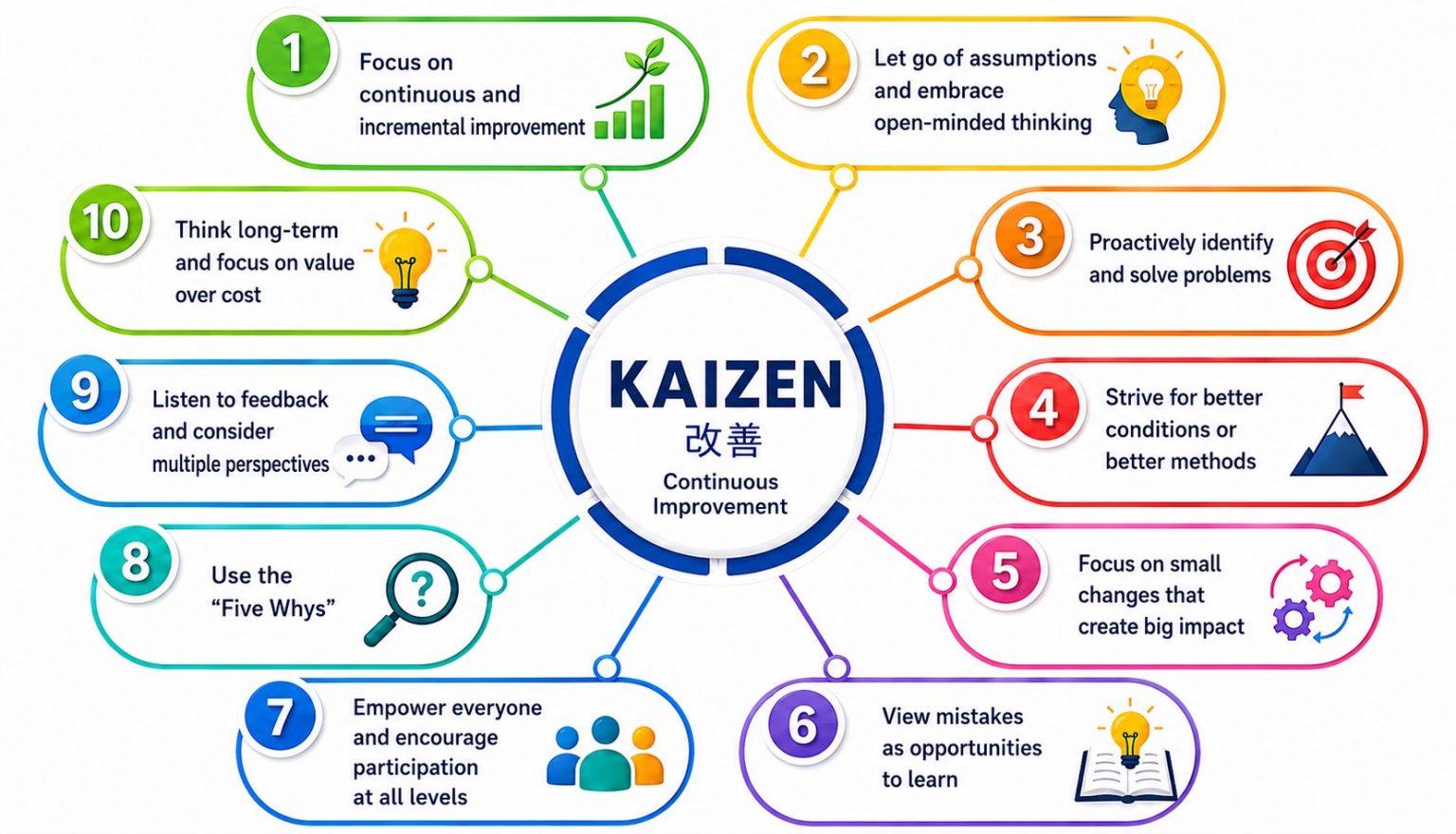
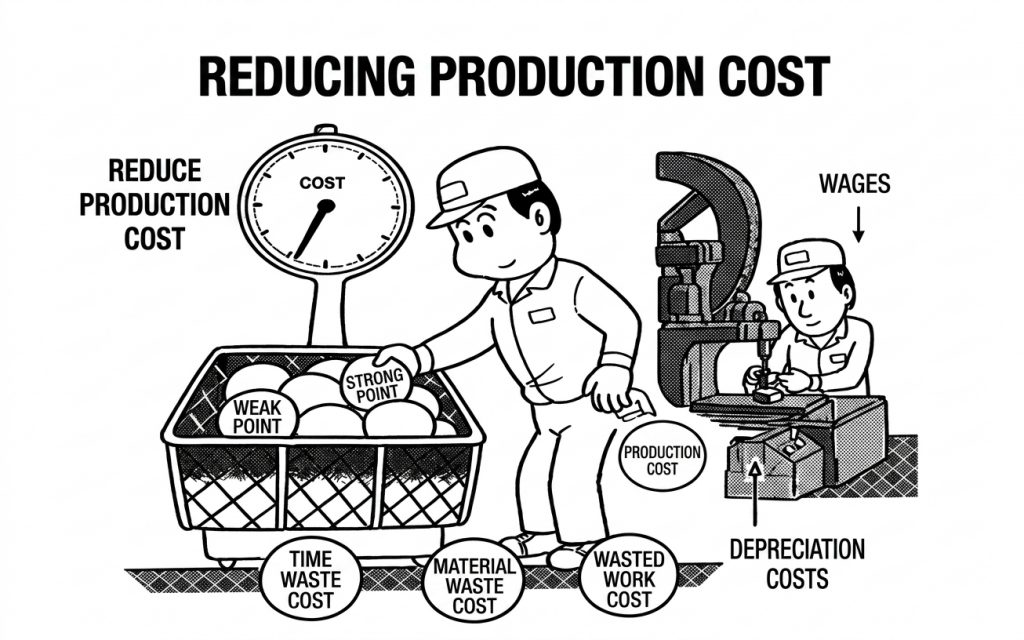
Kaizen (改善) is a continuous improvement approach focused on maintaining standards and making small, incremental improvements over time, while also complementing breakthrough improvements and innovations.


  The Essence of Kaizen :

         Incredible, Continuous Improvement: Focus on improving small things every day instead of waiting for a major disruption.
Everyone Involved: From management to frontline staff, everyone can contribute ideas to improve their work quality.
Low Cost, Low Investment: Focus on changing mindsets and maximizing the potential of existing people and equipment without needing to buy new machinery. Viewing Problems as Opportunities: Problems or work fatigue are the starting point for Kaizen to find better solutions.

Kaizen Philosophy and Culture in Practice  Kaizen Philosophy and Culture in Practice

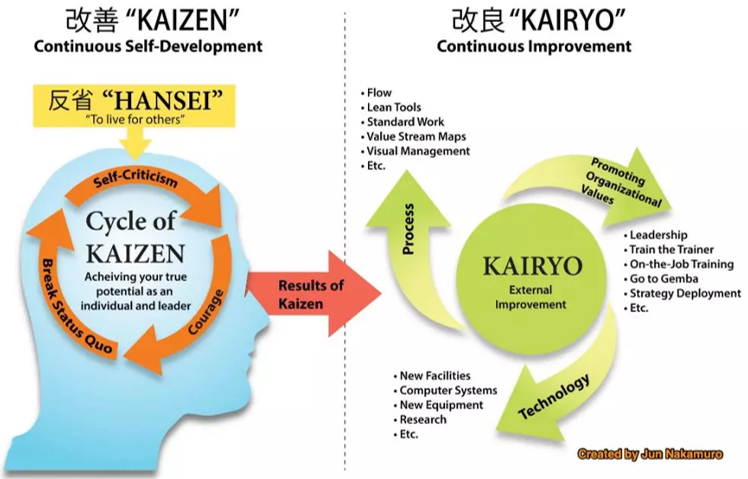
Applying Kaizen begins with HANSEI – self-reflection and identifying areas for improvement. Toyota promotes this as a daily working culture where employees are encouraged to recognize problems and weaknesses, even in successful projects.

Employees are empowered to stop the production line when issues are detected and actively participate in problem-solving. HANSEI-KAI (reflection meetings) are conducted regardless of whether a project succeeds or fails, strengthening a culture of listening, learning, and continuous improvement.

   
   KAIZEN (
改善)
means “continuous improvement” through small, incremental changes, focusing on developing people, improving ideas, and enhancing daily work behaviors.
    HANSEI (反省) = Self-Reflection / Review of Mistakes
  Kaizen Cycle concepts include:
  • Self-Criticism = Self-Reflection
  • Break Status Quo = Challenge Existing Methods
  • Courage = Be Willing to Change
It means that organizational development starts with people. Everyone contributes by sharing ideas and making small, continuous improvements to their work.

   KAIRYO (改良) It refers to “major improvements” or “breakthrough changes,” which are often associated with innovation, new technologies, or significant changes in processes.
   – New technologies, New machinery, New systems, Large-scale investments
  Divided into 3 main areas
   1.Process = Process Improvement
   2.Technology = Use New Technologies and Equipment
   3.Promoting Organizational Values = Develop Organizational Culture and Leaders
   “Results of Kaizen” Continuous Kaizen leads to major improvements (Kairyo) and long-term organizational growth.

“Sustainable organizational development begins with personnel development (Kaizen) and builds upon that foundation to drive organizational-level transformation (Kairyo)

      Problem A problem is the gap between the current situation and the ideal condition or target goal.
Recognizing that a problem exists is the first step toward improvement. It requires a positive mindset and a clear understanding of the problem through Genba (actual place), Genbutsu (actual thing), and Genjitsu (actual facts).

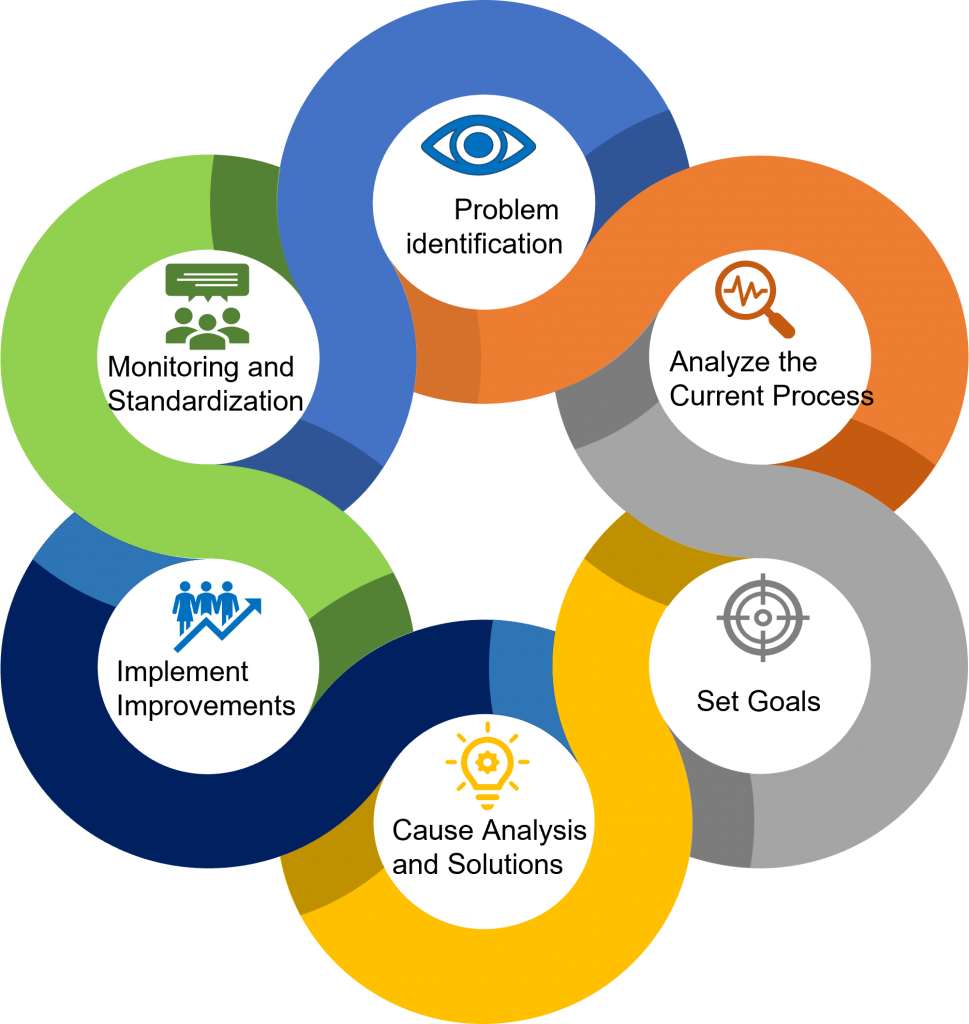
6 Basic Steps

For creative development and work improvement

     Kaizen There are no limitations on tools or methods. The focus is on achieving better results by making processes visible,
easy to understand, simple to implement, and effective in reaching goals.


Change the process steps

Change the preparation method

Change the position

Change the raw material

Change the size

Change the color

Change the shape

Change the structural direction

Change the composition

Think comprehensively, make continuous improvements, start small, and grow sustainably.

3 Basic Principles of Kaizen (3M)

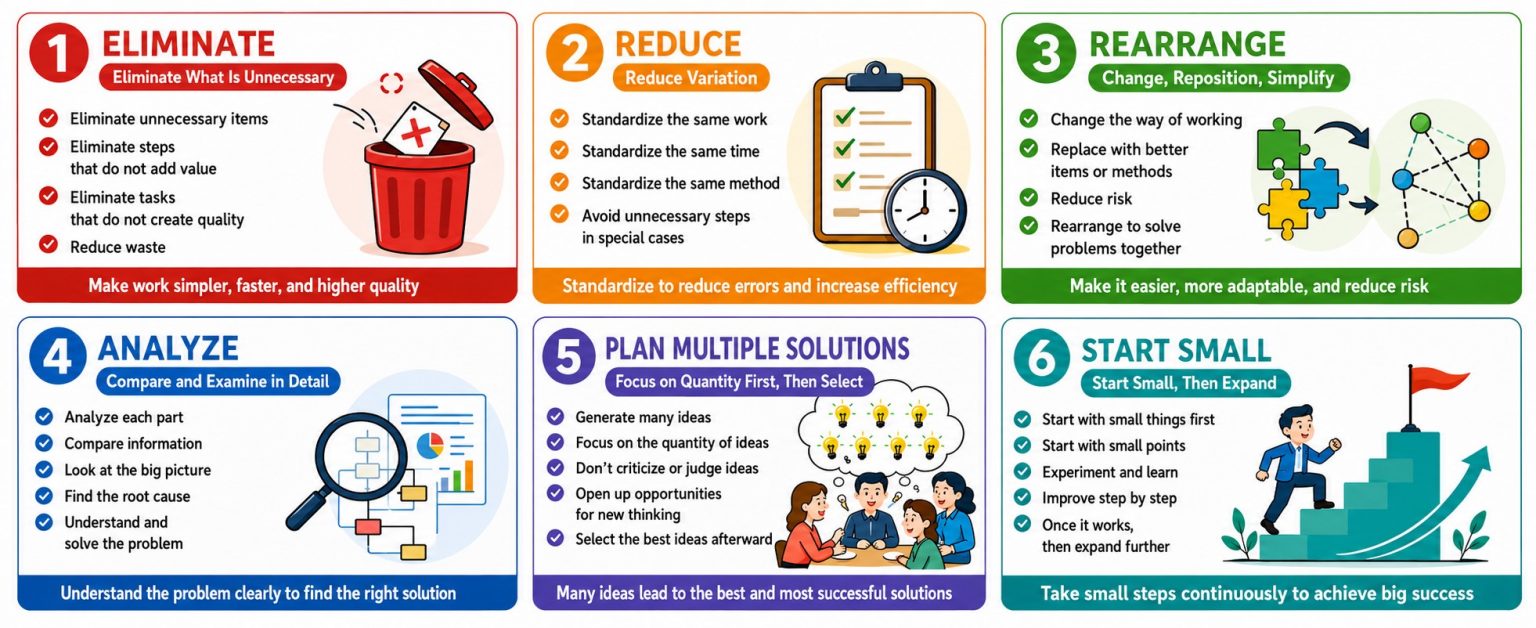
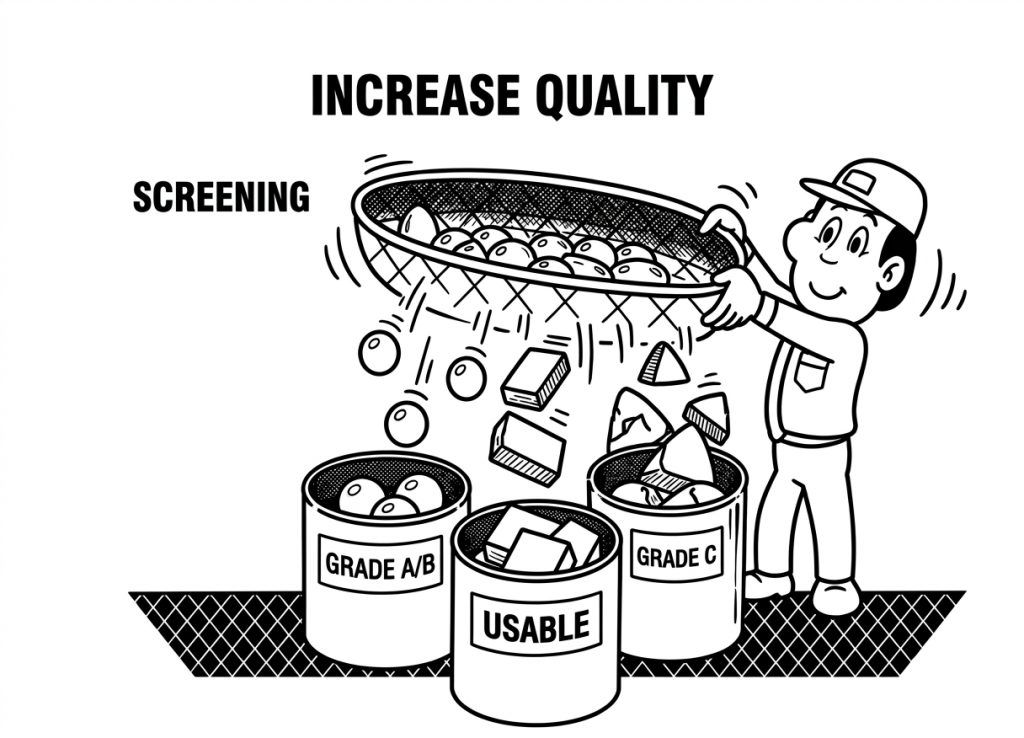
Eliminate unnecessary elements to improve work efficiency and strengthen the organization.

6 Steps of Systematic Kaizen Implementation

 
1. Identify Improvement Opportunities
Observe work processes to find areas that cause delays, unnecessary effort, fatigue, or frequent errors.
2. Analyze the Current Process
Review the actual work processes at the workplace to identify facts and understand the real situation without making assumptions.
3. Set Clear Goals
Define specific and measurable outcomes, such as reducing work time by a certain number of minutes or reducing process steps by a certain percentage.
4. Identify Root Causes and Solutions
Analyze the root causes of problems and brainstorm simple, practical, and effective solutions.
5. Test and Implement
Apply the selected improvement ideas and test them in the actual workplace.
6. Measure Results and Standardize
Evaluate whether the results have improved and establish new work standards to prevent returning to the previous way of working.

ECRS

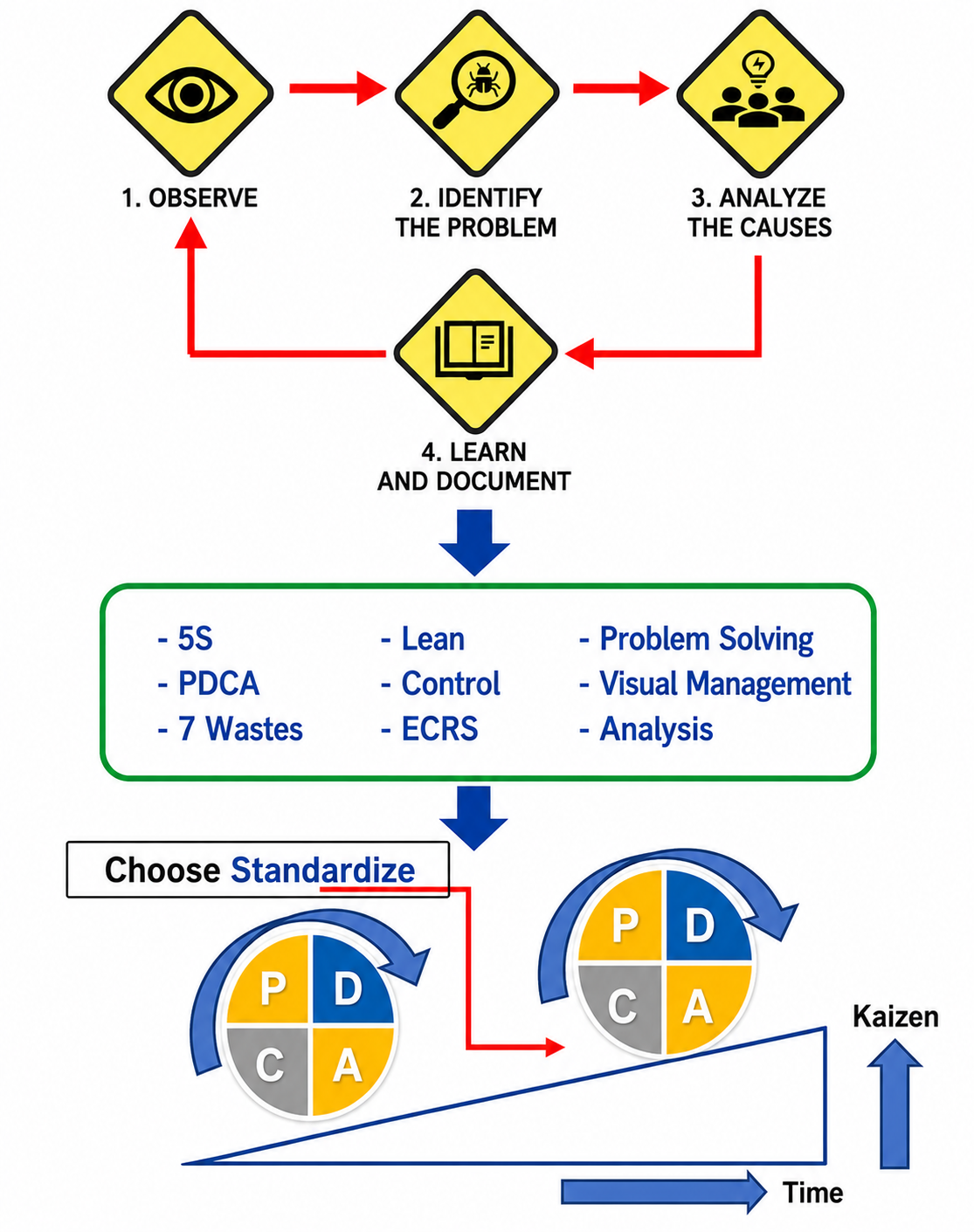
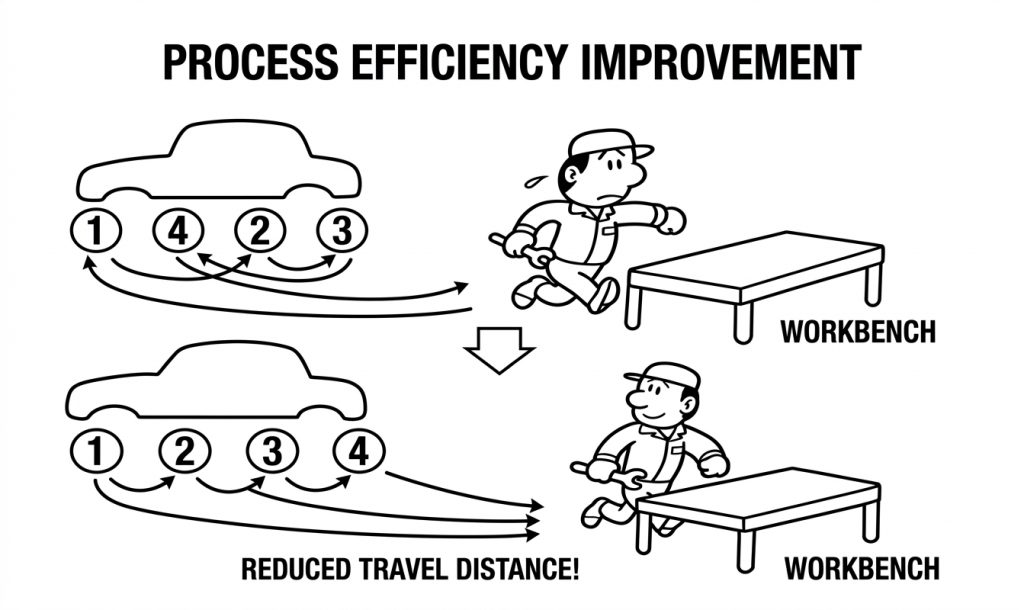
Used to review work processes and identify opportunities to eliminate, combine, rearrange, or simplify tasks.

5 S

Used to improve the workplace environment and create conditions for more efficient work.

Visual Management

Visual Management
Used to make problems visible at the actual workplace and enable immediate action and problem-solving.

5W1H

5W1H Analysis
A basic questioning tool used to review work processes by asking: Who, What, Where, When, Why, and How.

Kaizen Suggestion

Suggestion System for Improvement
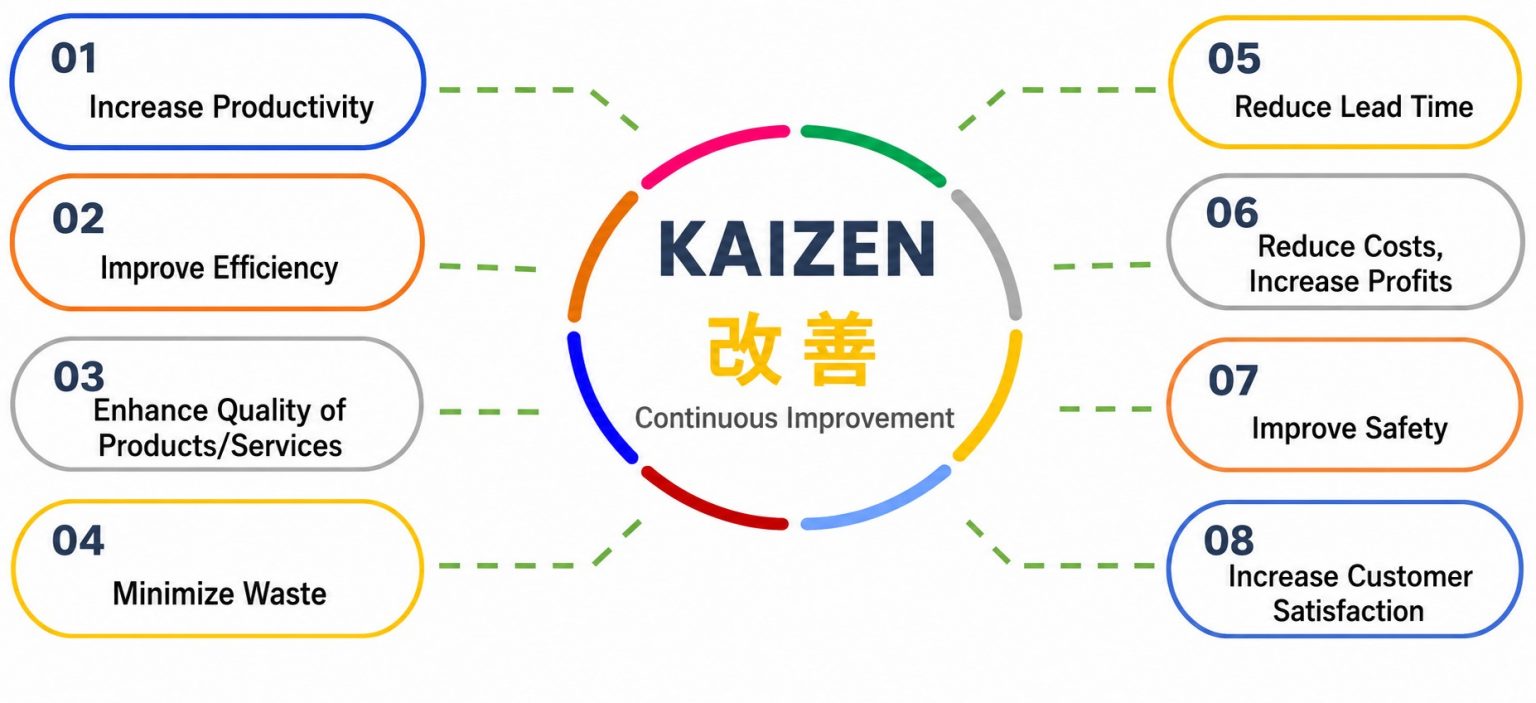
A system that encourages employees to propose ideas for improving work processes, reducing working time, lowering costs, increasing safety, and minimizing waste.
PDCA Cycle

PDCA Cycle (Plan-Do-Check-Act)
A quality management cycle that ensures continuous improvement and sustainable development.

Fishbone Diagram

Used to analyze the root causes of problems and identify why they occur.

Pareto Chart

Used to identify the most significant problems and prioritize them for improvement.

Gemba Walk

Go to the actual workplace, observe the actual situation, understand the real problems, and communicate with the people who perform the work.

Standard Work

Work Standardization
Establishing standard work methods to ensure the same procedures, consistent working time, and stable quality.

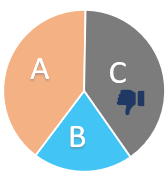
Work System Management Daily Job Management     »      Kaizen Process


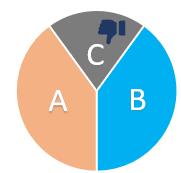
A = Daily Operations

B = Improvement Activities

C = Immediate Problem Solving

In general, improvement activities (B) are often pushed aside by daily operations (A) and urgent problem-solving tasks (C).


KAIZEN ways
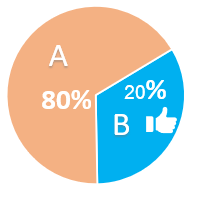
The principle of Kaizen is to make “improvement activities” a part of daily work.
 

KAIZEN ways

A = Daily operations 80%

B = Improvement 20%

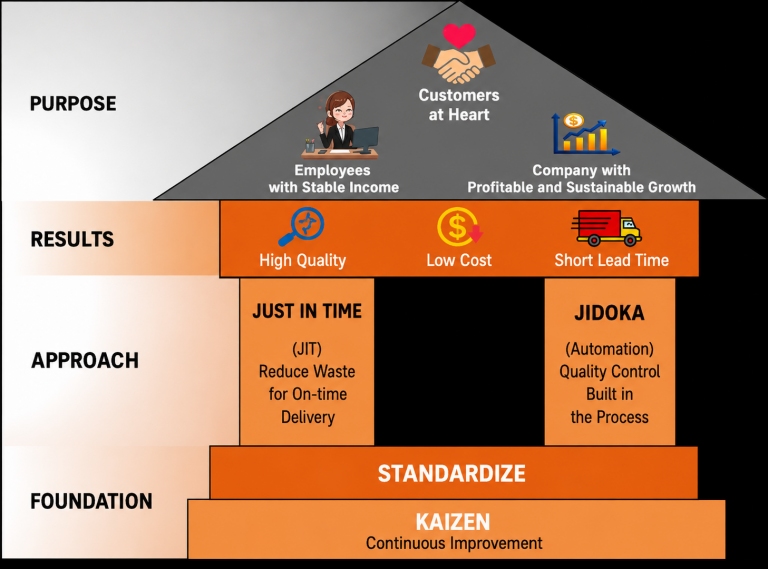
  “The House of Toyota Production System (TPS)” is a fundamental concept directly related to Kaizen, as Kaizen means “continuous improvement” aimed at enhancing work quality, reducing waste, and improving overall efficiency.

Source: Toyota Business Community Development

Benefits of Kaizen